







The Family Command Center: One Simple Space That Keeps Everyone Organized
Share
Every Busy Family Needs a Place Where Life Comes Together
It's Monday morning.
One child is looking for a permission slip. Another can't remember where their backpack was left. A school event is scheduled for Thursday, but nobody remembers the time.
Meanwhile, an important bill is sitting underneath a pile of mail.
For many families, the problem isn't a lack of effort. It's that important information and everyday essentials are scattered throughout the house.
A family command center offers a practical solution.
Think of it as your household's organization headquarters: one dedicated location where schedules, school papers, reminders, and frequently used supplies come together.
The best part? You don't need a large house, expensive furniture, or an entire room.
A small wall, entryway corner, or section of the kitchen can work beautifully.
1. Choose a Location Everyone Uses
The most effective family command center is easy to see and access.
Popular locations include:
-
Kitchen walls
-
Entryways
-
Mudrooms
-
Hallway corners
-
Areas near the family dining table
-
A small section of a home office
Choose a location where family members naturally pass throughout the day.
For younger children, place important items at a height they can comfortably reach.
2. Start with a Shared Family Calendar
A calendar is the heart of a family command center.
Use it to track school events, appointments, activities, and household responsibilities.
Consider assigning a different color to each family member.
For example:
-
Blue — Parent 1
-
Green — Parent 2
-
Yellow — Child 1
-
Purple — Child 2
-
Red — Important family deadlines
A color-coded calendar makes a busy week easier to understand at a glance.
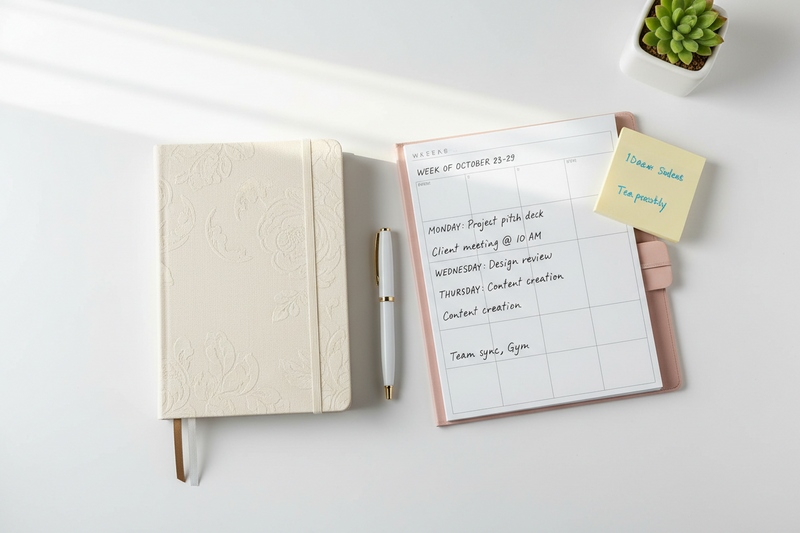
BrightDesk Co. tip: Pair a wall calendar with colorful dry-erase markers or highlighters to create a simple visual scheduling system.
3. Create an Individual Folder for Each Child
School papers have a way of appearing everywhere.
Homework assignments, permission slips, event notices, reading logs, and report cards can quickly create clutter.
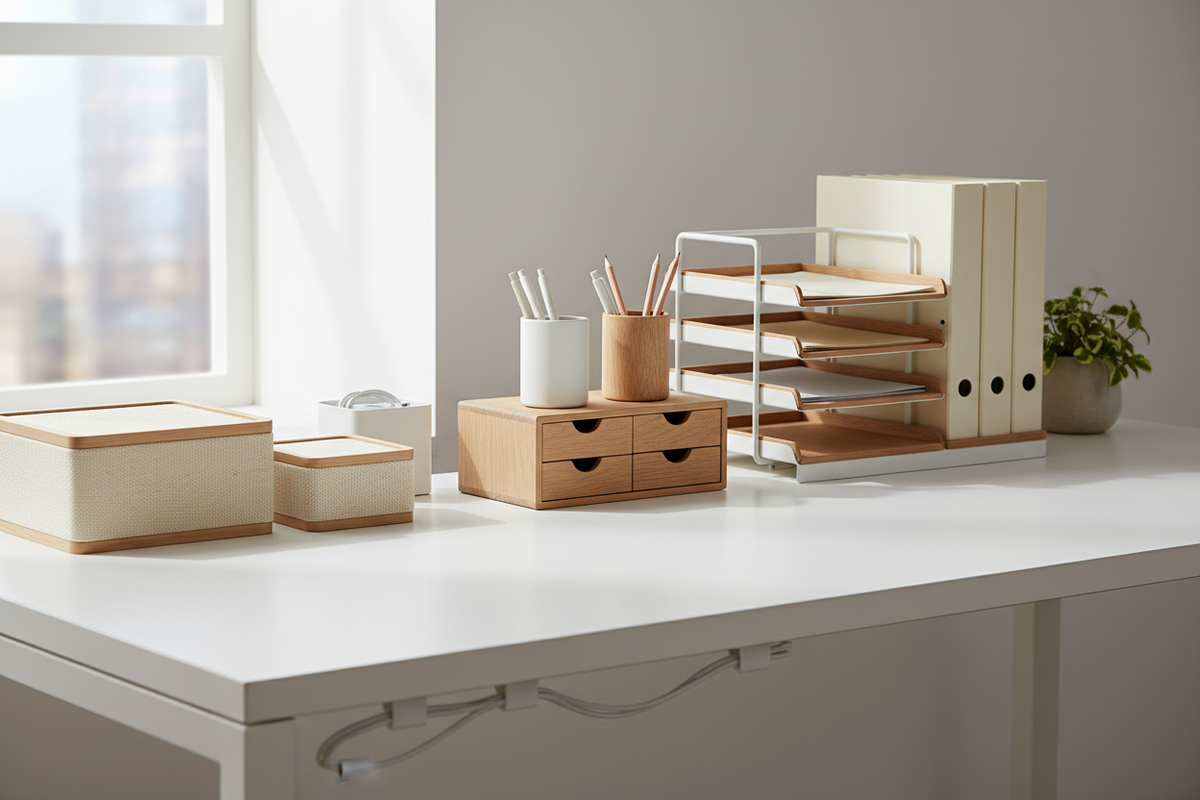
Give each child a clearly labeled folder or document tray.
Inside, create two sections:
Action Needed: Papers requiring signatures, review, or completion.
Keep for Reference: Important school information that may be needed later.
Review these folders regularly to prevent unnecessary buildup.
4. Build a School Supply Refill Station
Missing pencils and empty glue sticks can interrupt homework time.
Keep backup supplies in one designated container.
Useful items include:
-
Pencils and erasers
-
Pens and highlighters
-
Sticky notes
-
Glue sticks
-
Scissors
-
Notebook paper
-
Index cards
-
Labels
Choose storage that makes it easy to see when supplies are running low.
5. Give Backpacks and Everyday Items a Home
Install suitable hooks or use baskets for backpacks, lunch bags, and other daily essentials.
The goal is to eliminate the question:
"Where did I leave my bag?"
Encourage everyone to return their belongings to the same location after school or work.
For children, simple labels or picture symbols can make the system easier to follow.
6. Add a Weekly Planning Board
A family command center becomes more useful when it includes a short list of weekly priorities.
Create sections such as:
This Week
Important appointments and activities.
To Do
Tasks that require action.
Don't Forget
Items that need to leave the house.
Shopping & Supplies
Products that need replacing.
A dry-erase board or magnetic planning board works well for information that changes frequently.
7. Establish a Sunday Family Check-In
Even the best organization system needs regular attention.
Spend ten minutes reviewing the upcoming week together.
Ask:
-
What important events are coming up?
-
Are there school projects or deadlines?
-
Does anyone need supplies?
-
Are there forms to sign?
-
What should be prepared in advance?
This short conversation helps everyone understand the week ahead.
BrightDesk Co. Picks for Family Organization
Weekly Planners & Calendars — Keep important dates visible.
Document Folders — Organize school notices and household paperwork.
Storage Bins & Baskets — Give everyday essentials dedicated locations.
Dry-Erase Boards — Make changing schedules easy to update.
Labels & Sticky Notes — Help family members identify important items.
School Supply Value Packs — Keep frequently used supplies available.
Your Family Command Center Checklist
-
Choose a convenient location.
-
Install or place a family calendar.
-
Assign colors to family members.
-
Create individual school folders.
-
Prepare a supply refill container.
-
Designate a location for backpacks.
-
Add a weekly reminder board.
-
Schedule a regular family check-in.
Frequently Asked Questions
What should a family command center include?
A shared calendar, document folders, reminder board, storage containers, and designated spaces for frequently used items are useful starting points.
Can I create one in a small apartment?
Absolutely. A narrow wall organizer, portable file holder, or compact rolling cart can work well.
How do I keep the station from becoming cluttered?
Review papers weekly, remove outdated reminders, and avoid storing unrelated items in the area.
Should children help manage the command center?
Yes. Age-appropriate responsibilities, such as returning folders or checking the calendar, can help children practice organization.
A More Organized Home Begins with One Small Space
You don't need to organize your entire house overnight.
Start with one shared location, a few dependable tools, and a simple weekly routine.
Over time, your family command center can become a practical part of everyday life—helping everyone feel more prepared and connected.
Make Everyday Organization Easier with BrightDesk Co.