







Your Next Big Goal Starts Here: Build a Study Station for Exams and Certifications
Share
Going Back to Studying Isn't Always Easy
Maybe you're preparing for a professional certification.
Perhaps you're returning to college after several years.
Or you're learning a new skill while balancing work, family responsibilities, and everyday life.
Unlike earlier school years, your schedule may now be filled with competing priorities.
Finding time to study is challenging enough.
Finding your notes, remembering deadlines, and keeping track of progress shouldn't make it harder.
A dedicated study station can help create a consistent place to begin.
It doesn't have to be large or expensive.
It simply needs to support the work you're trying to accomplish.
1. Define Your Learning Goal
Before organizing supplies, write down what you're preparing for.
Include:
-
Exam or certification name
-
Target date
-
Required subjects
-
Official study materials
-
Practice requirements
-
Registration deadlines
-
Any permitted exam-day materials
Use official exam-provider guidance for current requirements.
Avoid relying on unofficial claims about guaranteed results or passing scores.
2. Choose a Study Location
Look for a place where you can work with reasonable comfort and limited interruptions.
Possible locations include:
-
A home office desk
-
A bedroom study corner
-
A dining table during quiet hours
-
A library workspace
-
A suitable shared study area
Choose a location with adequate lighting, a stable work surface, and access to necessary materials.
If the space is shared, use portable organizers so supplies can be moved easily.
3. Divide Materials by Subject
A large collection of books, printouts, and notes can become difficult to navigate.
Create a folder or binder section for each major topic.
For example, a general business course might include:
Section A — Core Concepts
Section B — Practice Questions
Section C — Case Studies
Section D — Review Notes
Section E — Difficult Topics
Adjust the categories to match the official syllabus or course requirements.
4. Create a Study Timeline
Begin with the exam date and work backward.
Identify how many weeks are available and divide the required material into manageable sections.
A sample four-week plan might look like this:
Week 1: Review foundational topics.
Week 2: Study remaining major concepts.
Week 3: Complete practice questions and identify weak areas.
Week 4: Revisit difficult material and confirm exam-day requirements.
This is only an example. Some exams require substantially more preparation.
5. Build a Focused Supply Kit
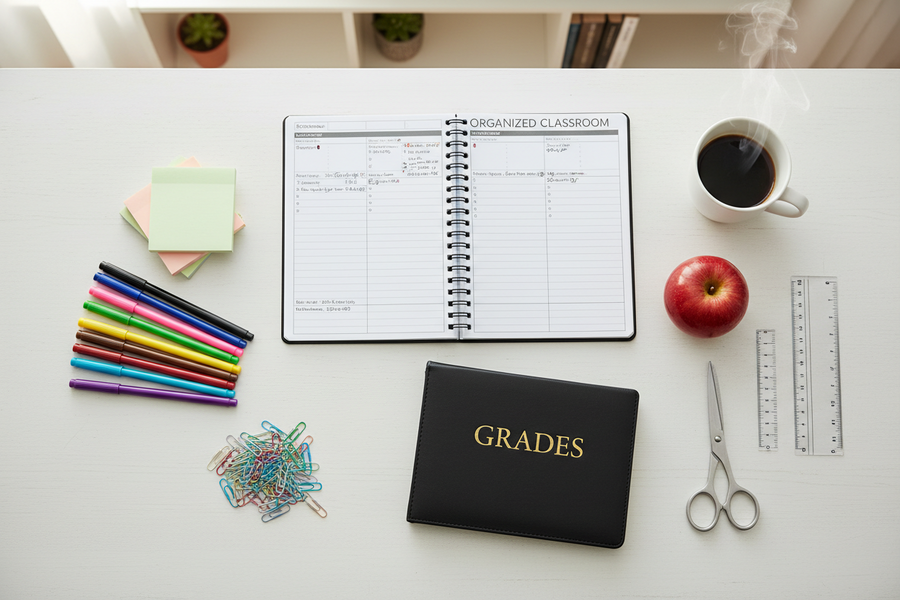
A practical study kit may include:
-
Notebooks
-
Pens and pencils
-
Highlighters
-
Index cards
-
Sticky tabs
-
Document folders
-
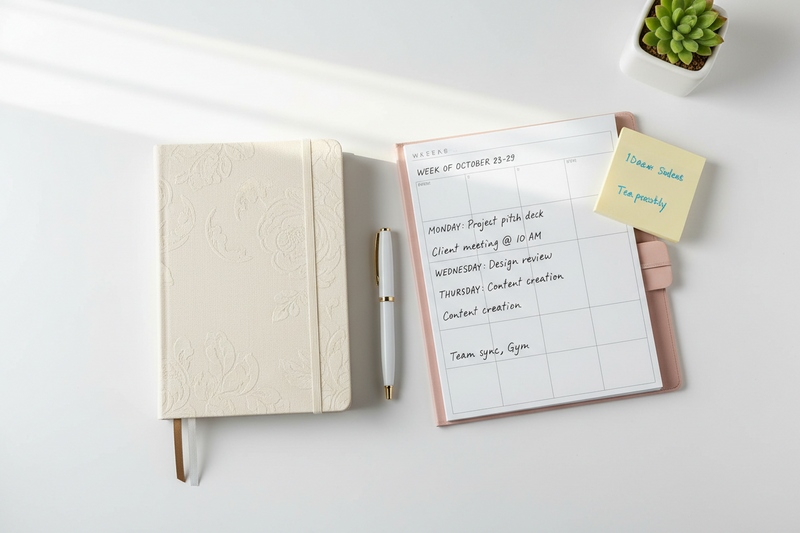
Weekly planner
-
Calculator, where appropriate
Keep the supplies together.
A small organizer can prevent repeated interruptions caused by missing materials.
6. Track Progress by Topic
Instead of measuring success only by hours spent studying, record which topics you've practiced.
Create a simple progress table:
| Topic | First Review | Practice Completed | Needs More Work |
|---|---|---|---|
| Topic A | Complete | Complete | No |
| Topic B | Complete | In Progress | Yes |
| Topic C | Not Started | Not Started | — |
Update the table regularly.
This helps identify where additional effort may be useful.
7. Use Practice Questions Thoughtfully
Practice questions can reveal gaps in understanding.
After completing a set of questions, review incorrect answers.
Ask:
-
Did I misunderstand the concept?
-
Did I misread the question?
-
Was my calculation incorrect?
-
Do I need more practice applying the material?
Use legitimate, authorized preparation resources. Avoid unauthorized exam questions or confidential test content.
8. Prepare for Disruptions
Adult learners often have unpredictable schedules.
Work deadlines, family needs, or unexpected appointments may interrupt a study plan.
Keep a short list of smaller tasks that can be completed during limited study periods.
For example:
-
Review ten flashcards.
-
Summarize one concept.
-
Correct five practice questions.
-
Organize notes from one lesson.
A flexible plan can help you resume after interruptions.
9. Keep a Review Notebook
Dedicate a small notebook to concepts that require extra attention.
For each topic, record:
Concept
What do I need to understand?
My Explanation
How would I explain it in my own words?
Example
How can I apply it?
Next Review
When should I revisit it?
This provides a focused resource for later review.
BrightDesk Co. Picks
Study Planners — Organize preparation schedules.
Index Cards & Flashcards — Support review and self-testing.
Notebooks & Paper — Record summaries and practice work.
Binders & Dividers — Separate study topics.
Desk Lamps — Provide suitable task lighting.
Desktop Organizers — Keep frequently used supplies accessible.
Exam Study Station Checklist
-
Confirm official exam requirements.
-
Choose a suitable study location.
-
Organize materials by topic.
-
Create a realistic study timeline.
-
Prepare essential supplies.
-
Track progress.
-
Review mistakes.
-
Keep difficult topics accessible.
-
Confirm exam-day instructions.
Frequently Asked Questions
Do I need a separate room to prepare for an exam?
No. A consistent study area or portable supply kit can work well when space is limited.
What supplies are useful for certification study?
Notebooks, planners, flashcards, folders, and writing tools are versatile essentials.
How should I organize several study subjects?
Use clearly labeled folders or binder sections and maintain a topic-based progress checklist.
Can a study station improve exam results?
An organized study station can support preparation routines, but no workspace or accessory can guarantee an exam outcome.
Give Your Goal a Place to Grow
Preparing for an important exam requires effort, patience, and a plan.
A thoughtfully organized study station can make the practical side of preparation easier.
Start with a clear goal, gather the tools you need, and build a routine that fits your life.
Explore BrightDesk Co.: Study Tools · Notebooks & Paper · Planners & Desk Essentials